Cybersecurity training teaches practical skills you can use to protect systems and respond to incidents in real situations. Understanding what training actually covers helps you choose the right path and build skills that matter to you.
What you need to know:
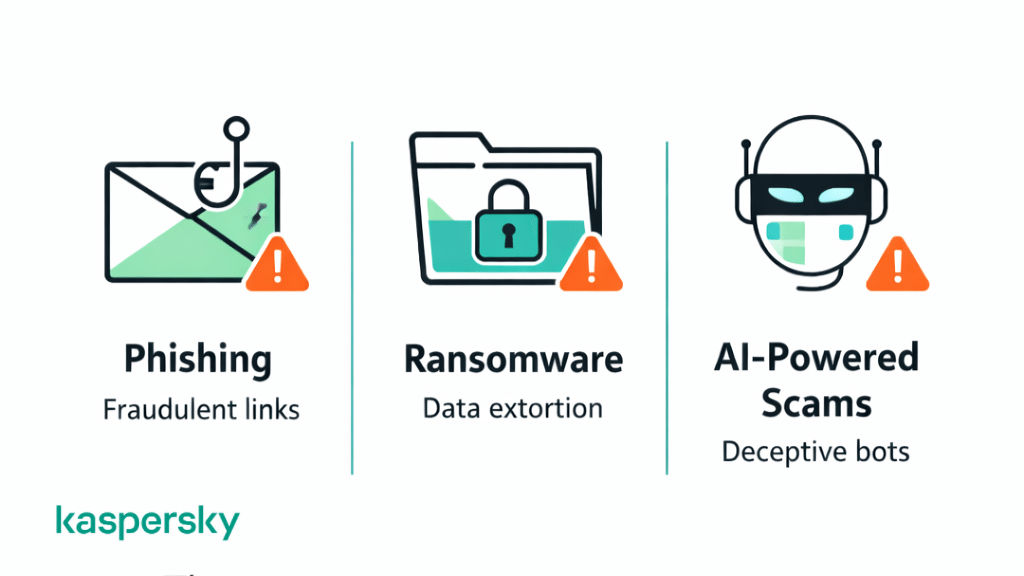
- Cybersecurity training teaches you how to prevent threats like phishing, ransomware, and AI-powered scams.
- It is useful for private individuals, remote workers, and professionals, not just IT experts.
- Training covers practical skills such as password security, device protection, and recognizing suspicious activity.
- Most cyber incidents happen because of human mistakes, which training can significantly reduce.
- Simple habits like enabling multi-factor authentication (MFA) and updating software improve security immediately.
- Structured online training and certifications can also open doors to cybersecurity career opportunities.
What is cybersecurity training?
Cybersecurity training simply refers to learning skills in the field of cybersecurity. This can apply to both individuals and workforces.
The information can be useful whether you’re looking for a bit of knowledge to feel more confident or developing advanced expertise and undergoing formal education to become a professional.
Organizations carry out cyber awareness and cybersecurity training to help staff members develop their knowledge of best practices to keep sensitive data secure. Individuals may also take this training to protect their own devices and connections or for personal development.
Cybersecurity training typically teaches response procedures for addressing and managing risk to computer security. Participants can learn how to identify threats like cyber attacks, data hacks and phishing activities, how to assess risk levels, how to report incidents, and how they can be addressed.
Who needs cybersecurity training?
Cybersecurity training is not just for IT teams. Anyone who uses cloud tools or connected devices can benefit from understanding how modern threats work. It is useful for all web users to have some knowledge of cybersecurity.
Cyber risks affect individuals, remote workers, freelancers, and employees across virtually all industries. Scams and data breaches don’t target job titles; they target access. A single mistake by one person can expose an entire organization.
That’s why cybersecurity training is becoming relevant far beyond technical roles. Healthcare staff, finance teams, educators, small business owners, and contractors may all handle sensitive data. Basic cybersecurity is now part of everyday professional responsibility.
Why is cybersecurity training useful for private individuals?
Cybersecurity training helps private individuals protect personal and financial information. It also enables people to properly protect their connected devices from everyday threats.
Many attacks begin with simple tactics like phishing emails or account impersonation. Training builds the skills to recognize these attempts early and avoid common traps. This reduces exposure to scams and the damage scams can cause.
Cybersecurity knowledge also builds long-term digital confidence. Understanding how threats work makes it easier to use online services safely without constant worry.
Why do professionals and career changers benefit?
There is a big demand for professionals with skills in cybersecurity. A career in this field can take different directions, depending on a person’s interests and goals.
Many careers in cybersecurity start in entry-level IT roles, such as help desk technicians, network administrators, or software developers. Many cybersecurity professionals start their careers as a junior information security analyst after gaining some experience in IT.
Kaspersky online cybersecurity training
Creating the next generation of global security experts.
- ☑️Hands-on training
- ☑️Real Life cases
- ☑️Up to-date Knowledge
- ☑️Highly practical knowledge
- ☑️Taught by Industry experts
What does cybersecurity training cover?
There are core areas that most cybersecurity training covers to give individuals a well-rounded knowledge of the field. The best courses are always adapting to the most modern threats.
Cybersecurity training often includes:
- Phishing and AI-driven scams: how to spot phishing and methods like deepfake voice attempts or targeted social engineering, and how to report them quickly
- Passwords and authentication: how to create strong passwords and how to implement multi-factor authentication
- Physical security: how to ensure the safety of physical devices and documents
- Mobile and endpoint security: securing laptops, smartphones, and personal devices used for work, including update hygiene and app permissions
- Working remotely: how to stay safe when working remotely, including the risks of public Wi-Fi
- Cloud and SaaS security: secure use of cloud applications, file-sharing controls, and managing third-party integrations
- Social engineering: the most common techniques malicious actors use and the influence of psychology
- Data and record management: how to monitor and manage important data securely
- Installation protocols: how to install third party applications and software programs safely on company computers
- Incident response basics: what to do when suspicious activity occurs and how to escalate concerns early
There are levels to the training. A lot of courses for beginners will focus on threat detection and practical defensive skills. Kaspersky’s online training begins by explaining technical information about threats in a straightforward and understandable way. It also provides information about the latest scams and practical tips to steer clear of them.
How does training address common cyber threats?
Training provides awareness and examples of cyber threats. A non-exhaustive list of scam methods is below:
- Phishing: This involves sending fraudulent emails pretending to be from a reputable source. The intention is to steal sensitive information like login or payment details. Modern methods incorporate AI tools to sound more convincing.
- Malware: Malicious software which attempts to gain unauthorized access and damage a computer or network.
- Ransomware: Similar to malware, but the intention is to block access to files on a computer until the victim pays a ransom.
- DDoS: Distributed denial of service attack, in which the cybercriminal overwhelms a system’s resources so that it does not function properly.
- Structured Query Language (SQL) injection attack: This takes place on a database-driven website when the hacker manipulates a standard SQL query. It is carried out by injecting a malicious code into a vulnerable website search box, therefore forcing the server to reveal crucial information.
- Cryptojacking: This involves attackers accessing someone else’s computer for mining cryptocurrency.
- Zero-day exploits: These involve attackers taking advantage of a security vulnerability which is known about but not yet patched.
- AI-powered scams: These use highly convincing emails, messages, and even voice calls that mimic real people or trusted organizations. They can be harder to spot and can lead to account takeover,
- Insider threats: A threat which does not involve a third party but an insider. This could be an individual from within the organization with extensive knowledge about the organization. Insider threats have the potential to cause significant damage.
What technical fundamentals are included?
The same technical fundamentals tend to underpin cybersecurity training. They teach overall good digital hygiene as well as how to spot threats in many different scenarios.
Application security
Application security focuses on protecting software applications from threats. This applies especially to companies that develop and sell their applications and cloud services, but also to businesses more generally.
Security settings which are not configured properly are a significant cause of cloud account data breaches. Companies can sometimes use a major cloud service without realizing that they need to customize their security settings from defaults.
The main causes of cloud application misconfiguration are:
- Lack of awareness of cloud security policies
- Lack of adequate controls and oversight
- Too many interfaces to manage effectively
- Negligent insider behaviour (i.e. user error)
Encouraging effective digital hygiene and ensuring strict administration privilege controls are key aspects of cyber awareness which help to strengthen application security and prevent apps from being breached.
Information security
Information security refers to the protection of company data and the data collected from customers, clients, or vendors.
Most organizations will need to adhere to information security standards – with penalties for non-compliance if negligence leads to personally identifiable information being compromised.
Cybersecurity focuses on how organizations collect, store, and transmit data. A cybersecurity plan aims to put protections in place to ensure that data is encrypted as needed and protected from being breached.
Disaster recovery planning
To avoid huge levels of damage happening after a security breach, it’s important to have a disaster recovery plan in place.
Disaster recovery protections typically include:
- Strategies for preventing a breach or malware infection
- Preparations for rapid recovery once an attack has taken place
- Measures that a cyber security expert will put in place include a backup and recovery system, incident response drills, and strong endpoint protection.
Network security
Network security aims to protect an organization’s physical network and all the devices connected to it. Most companies use firewalls to monitor incoming and outgoing traffic for threats.
Other key aspects of network security include securing the wireless network and ensuring any remote connections take place through encrypted methods.
Network security is designed to ensure that only authorized users gain access to the network, and that no suspicious behaviours are happening inside the network that would indicate a breach.
End user security
End user security, or endpoint security, refers to protecting the devices that users work with, and users themselves. Given the high proportion of cyber attacks which start with a phishing email, end user security is essential.
Common types of end-user protection include:
- Keeping devices updated
- Using up-to-date antivirus software
- DNS filtering to block malicious websites
- Firmware protection to prevent breaches at the firmware layer
- Passcode-protected screen locks
- Remote management and device detection
Organizations which don’t practice end user security could suffer a breach through an unprotected employee device that becomes infected with malware and then spreads that infection throughout the company network.
Aside from device protection, cybersecurity awareness training is a core aspect of end user security. It’s good practice to provide regular training to employees on topics such as detecting phishing emails, password security, handling sensitive data, and other cyber hygiene principles.
Operational security
Operational security involves reviewing an organization’s entire security strategy as a whole to ensure that all security tactics are working together – and not in conflict – throughout operations.
Operational security is the umbrella that covers all IT security processes. It ensures that the organization is not only securing all areas of a potential breach, but also regularly updating its security strategies to keep up with the latest threats and security advances. Part of this process involves thinking like an attacker – examining the different areas of a technology environment to identify where a potential breach could occur.
What practical skills will you gain?
Cybersecurity training provides practical tips on how to respond effectively if an attack occurs. As well as prevention, modern training may teach practical response steps that reduce long-term impact.
Participants learn how to recognize threats, and when an incident may be happening. The next steps are about how to secure accounts and devices quickly. Training explains how to assess what may have been affected, from email accounts to financial information.
Courses also cover containment principles, such as limiting further access and understanding how attackers maintain persistence. This may include guidance on when to notify banks, service providers, or authorities, depending on the situation.
Cybersecurity training emphasizes clear communication and documentation as well as who to contact when an attack takes place.
Why is cybersecurity training important?
Cybersecurity training reduces preventable digital risks by addressing the most common causes of breaches: phishing, credential misuse, misdirected data, and poor account security. Modern threats increasingly rely on human interaction, not technical exploits alone.
In organizational environments, structured cybersecurity training for employees helps reduce business risk by strengthening the human layer of defense. When every team member understands how threats work, companies are less exposed to data breaches, operational disruption, and reputational damage.
Effective cybersecurity training builds digital resilience. It reinforces consistent security behaviors and supports the effective use of protective tools. Training strengthens trust with customers and partners. In many professional environments, employee cybersecurity training also supports compliance with industry regulations and internal security policies, helping organizations demonstrate accountability and due diligence.
How do human mistakes lead to cyber incidents?
A business’s digital security is in the hands of every employee with access to their digital systems. Some common mistakes employees make that compromise digital security are:
- Downloading malware-infected email attachments.
- Visiting untrustworthy websites.
- Using weak passwords.
- Not updating passwords regularly.
- Accidentally sending an email to the wrong recipient.
Because employees often have direct access to systems and sensitive information, structured training reduces the likelihood that a single mistake can escalate into a large-scale security incident. For organizations, this translates into lower financial exposure and stronger operational stability.
How does training reduce personal and financial risk?
Training helps minimize financial and personal damage. When people can recognize suspicious activity early and understand safe digital habits, they are less likely to expose sensitive data or fall for AI-powered scams.
One major benefit is preventing account takeover. Learning how phishing works and how to use strong authentication practices means attackers have fewer opportunities to access important accounts.
Training also helps to limit ransomware impact. Knowing not to open suspicious attachments, enable unsafe macros, or download unknown software reduces the chances of malware taking hold.
Training improves early detection. When people recognize things like unusual login alerts or strange device behavior, they can act quickly. This lowers both the financial and personal impact of an attack.
How are AI-powered threats increasing the need for training?
AI-powered threats are making scams harder to spot and easier to scale. This increases the need for practical and up-to-date training.
Phishing messages are now more convincing. AI agents and tools can generate realistic emails that match tone, branding, and even personal details. It has removed the obvious grammatical mistakes people once relied on to detect scams.
Deepfake impersonation adds another layer of risk. Cloned voices and realistic video messages can mimic trusted individuals. This increases the chance of emotional decision-making.
Automated scam techniques also allow attackers to adapt quickly. Messages can be rewritten in seconds to match current events or specific targets.
How can you apply cybersecurity training in everyday life?
Cybersecurity training becomes valuable when it turns into daily habits, not just course material.
In practice, this means good habits like pausing before clicking unfamiliar links and verifying payment information. It also means keeping devices updated and being cautious about what information is shared publicly.
Training helps you recognize patterns. Continued learning strengthens digital judgment and gives practical advice on good security.
How can you strengthen your account security?
Use strong passwords, first and foremost. Password hygiene should be a key focus in cybersecurity training and as such, people should set strong rulesets that include special characters, minimum lengths, and mixed-case letters. A password manager can be useful, as this can help employees generate complex passwords that are less vulnerable to hacking and dictionary attacks.
Many organizations now require users to set up two-factor authentication to protect their user accounts and emails. This ensures that even if hackers manage to compromise the user’s password, it is far less likely that they will be able to access the account it is linked to, as they would not be able to get the one-time password generated to the user’s cell phone, for example.
How can you protect your devices and data?
A few simple precautions can make all the difference. The top tips for protecting devices and data include:
- Ensure that all software is kept up to date so that the most recent security patches are deployed through the company’s systems and devices.
- Back up data. By ensuring that all data is backed up frequently people can ensure that in the event of a breach, they can recover as much as possible.
- Use VPNs: We recommend that you should use virtual private networks (VPNs) to encrypt their online traffic and help shield any sensitive information.
How can you build long-term cybersecurity habits?
Good cybersecurity habits are built through knowledge of the risks and the ways that scammers target people. Strong passwords and an eye for scam emails are just the start of these digital habits.
In terms of cyber security training for employees, this can raise awareness of how easy it can be for cybercriminals to breach a company’s cybersecurity protocols, the IT team can occasionally implement simulations of phishing attacks that demonstrate what these attacks look like and how employees can avoid them.
Cybersecurity training is not a one-and-done proposition and as such, people should participate in regular retraining sessions that keep cybersecurity in the forefront of their minds and their skills up to date.
How can you get started with cybersecurity training?
Many people looking to undertake training are trying to launch a cybersecurity career. The industry has grown as we live more of our lives digitally. This means more jobs in the field.
Before starting a cybersecurity role, it’s important to develop some core IT skills through IT security training, such as programming, networks and systems administration, and cloud computing. Some form of structured training can accelerate your path towards obtaining a high level of knowledge or even a career.
You don’t need a technical background to begin building practical skills.
Beginner-friendly entry points include online courses and free resources from recognized organizations. These introduce core topics like phishing and safe browsing without overwhelming detail or too much technical info.
From there, you can choose between structured and self-guided learning. Structured programs follow a clear path and may include certifications – self-guided learning allows you to explore topics at your own pace through resources like videos or books.
The right next step depends on your goal. If you want personal protection, focus on digital safety and account security basics. If you’re aiming for a career shift, look for accredited courses.
What beginner-friendly training options are available?
There are several accessible ways to begin cybersecurity training. Which you opt for depends on how you prefer to learn.
Self-paced online cybersecurity training allows you to start immediately and learn at your own speed. Online platforms introduce introductory cybersecurity courses, while government resources such as CISA provide free materials and exercises.
Structured cybersecurity classes follow a more formal curriculum through education establishments.
Guided learning paths combine theory with hands-on labs and certifications. These paths are useful if you want a clear roadmap, whether for career development or building stronger technical confidence.
Should you pursue cybersecurity certification?
Certification adds the most value when you’re pursuing a cybersecurity role or want to demonstrate commitment to employers. It shows that you understand key concepts and have invested time in formal training.
Entry-level certifications and cyber security classes are useful if you want structured learning and proof of foundational knowledge.
Certification isn’t required if you’re just looking to develop skills for your personal life. However, for career development, it can improve credibility and help any goals of long-term advancement in the field.
What career paths are available in cybersecurity?
Cybersecurity offers several career paths. The one you are drawn to may depend on whether you prefer building defenses or responding to incidents.
Engineering and architecture focus on designing and maintaining secure systems. Security engineers build defenses against threats, while architects oversee the broader security structure. These roles require strong networking and system administration skills and a broad understanding of information technology.
Incident response and forensics involve detecting breaches, limiting damage, and investigating how attacks happened. This path combines technical analysis with documentation and attention to detail.
Management and leadership roles oversee security strategy, teams, and compliance. Positions like cybersecurity manager or Chief Information Security Officer (CISO) require experience in risk management and leadership.
Consulting and offensive security focus on finding weaknesses before attackers do. Penetration testers and ethical hackers simulate attacks to identify vulnerabilities and strengthen defenses. These roles rely on technical skills in scripting.
How can structured training platforms support your learning?
Structured training platforms help turn theory into practice through guided exercises and real-world scenarios. Learners can test skills in simulated environments that mirror real situations.
They also provide progress tracking, so you can see how your knowledge develops over time and identify areas that need improvement. Many platforms are built or supported by industry professionals. This means the material reflects current threats and real workplace expectations.
Related Articles:
- What are the key benefits of Security Awareness Training?
- What are the key aspects of cybersecurity?
- What are the different types of Cybersecurity Attacks?
- Why should small businesses take cybersecurity seriously?
Related Products:
- Kaspersky Premium
- Download a free 30-day trial of our premium plan
- Kaspersky Cybersecurity Training platform
FAQs
Is cybersecurity training difficult for beginners?
It isn’t usually too challenging. Many courses are designed for complete beginners and start with basic concepts before moving to more advanced topics.
Do you need coding skills to start cybersecurity training?
No. Coding can be useful later, but most entry-level training focuses on core security principles and awareness.
Is cybersecurity training worth it?
Yes. It helps protect personal and professional data and can potentially even open career opportunities in a growing field.